Blogs
From a personal lab to a production-ready collection — fully verified for 2026 LTS, equipped with visual previews, and built to streamline your next demo or POC.

Peter Richards
The Evolution of the Library
When I wrote about scaling Liferay fragments with AI and automation earlier this year, the repository was already transitioning from a experimental lab into a structured UX library. The goal was simple: prove that custom fragment design could be accelerated using AI tools without sacrificing maintainability or performance.
Since then, the repository has expanded significantly in both scope and capability. What started as a modest collection of components and navigational experiments has grown into a comprehensive, community-driven resource for Sales Engineers, solutions architects, and frontend developers looking to deliver polished, production-ready Liferay DXP experiences without building every component from scratch.
Key Enhancements at a Glance
If you haven’t checked out the repo recently, here is what has changed behind the scenes:
1. Fully Verified for 2026 LTS
Every fragment in the collection has been systematically tested and validated against the latest 2026 LTS release. You can import these components into your modern environments knowing that markup, CSS classes, and Client Extension hooks are fully aligned with current platform standards.
2. Built-in Visual Gallery
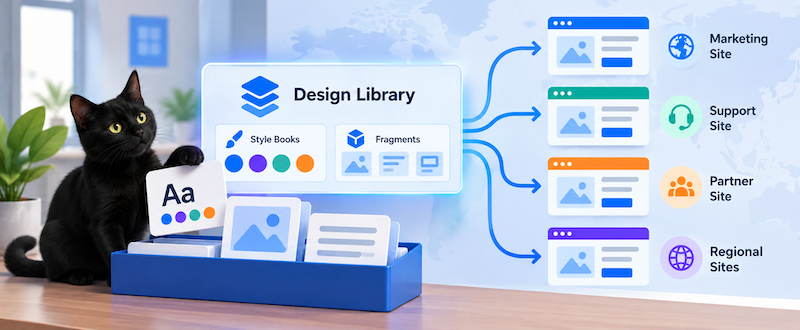
Choosing the right fragment shouldn't require importing six different zip packages just to see how they render on a page. The repository now includes a Visual Gallery right in the documentation, allowing you to quickly browse visual previews, review layout options, and select exact components before touching your DXP instance.
3. Complete Backwards Compatibility
While the primary branch targets 2026 LTS, real-world deployment often involves supporting legacy or client-specific environments. The repository now maintains packaged, version-specific release archives to ensure seamless backwards compatibility across prior DXP versions.
4. Instant "Drop-and-Go" Deployment
We’ve retained and refined our automated zip-based release workflow. Download the packaged release file, place it straight into your DXP /deploy directory, and let the platform handle the rest — no manual import wizards required.
Featured Fragments to Explore
Here are a few of the standout components currently available in the collection:
-
Automated Meter Reading: A utility fragment built for industrial and utility use cases. It handles numeric input formatting, backspace logic, and auto-advancement out of the box, pushing data directly to Liferay Objects via callback functions.
-
Commerce Dynamic Badge Overlay: A real-time product overlay fragment that dynamically applies badges (such as New, Low Stock, or Featured) over Commerce product card components based on live data triggers.
-
Collection-Based Date Displays: Configurable date-mapping UI components that format and bind complex temporal data directly from asset collections and data providers.
How to Get Involved
This repository thrives when it reflects real customer scenarios and field requirements. Whether you’re preparing a high-impact demo or building out a custom portal, there are several ways to contribute:
-
Submit Pull Requests: Built a custom fragment for a recent prospect or client solution? Open a PR and share it with the wider ecosystem.
-
Suggest New Features: Have an idea for a component that would solve a common demo hurdle? Open an issue on GitHub or reach out directly with your concept.
Get Started Today
Stop reinventing the wheel on every project. Take a look through the visual gallery, grab the latest release, and drop these components into your next environment:
👉 Explore the Repository: github.com/peterrichards-lr/liferay-fragments
Related Assets...
More Blog Entries...